• Use Cases
  • Pricing
  • Security
  • Docs
Sign InStart free

The outbound integration layer for SaaS products: emit once, then let Meshes handle routing, retries, fan-out, and delivery history.

© Copyright 2026 Meshes, Inc. All Rights Reserved.

About
  • About
  • Security
  • Blog
  • Contact
  • FAQ
Product
  • Pricing
  • Demo
  • Integrations
  • Guides
  • Changelog
  • Status
Compare
  • All comparisons
  • Build vs buy
  • vs Paragon
  • vs Merge
  • vs n8n
  • vs Zapier
  • vs Make
Use Cases
  • All use cases
  • Embedded CRM sync
  • Per-tenant Slack
  • HMAC webhooks
  • Multi-env workspaces
  • Payment failed
  • User signup fan-out
  • Churn prevention
  • Trial expired events
Developers
  • Documentation
  • Agents
  • Tools
  • API Reference
  • MCP Server
  • llms.txt
Legal
  • Terms of Service
  • Privacy Policy
  • Acceptable Use Policy
  • Cookie Policy

Blog Archive: May 2026

Integration engineering posts published in May 2026, covering SaaS integrations, event routing, retries, OAuth, and delivery reliability.
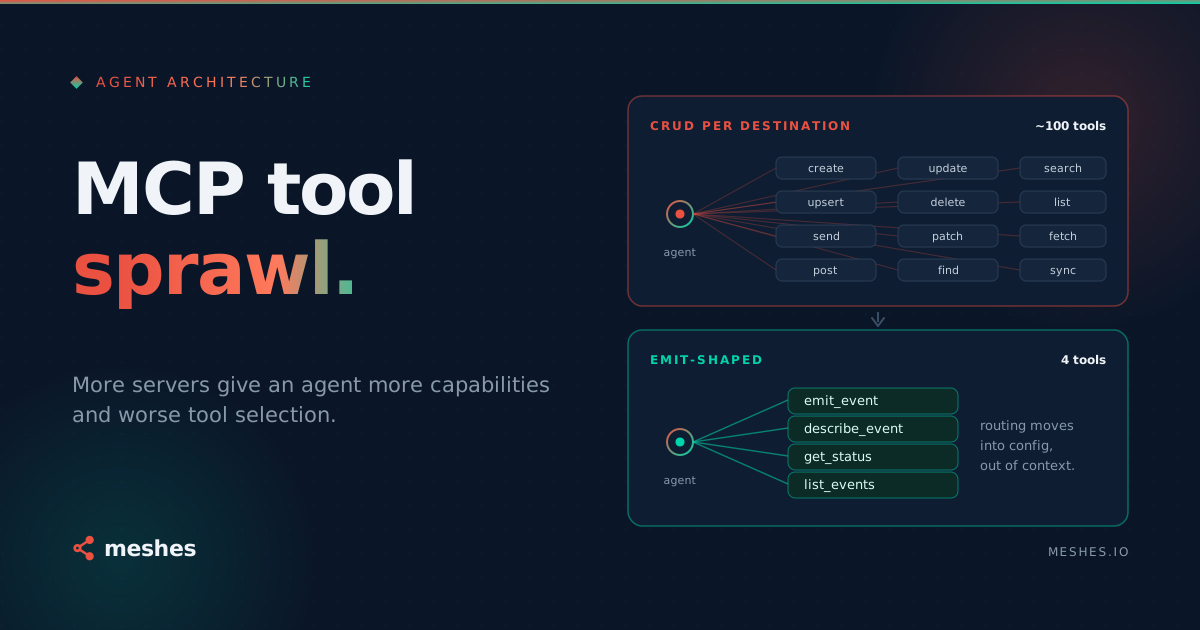
Cover Image for MCP tool sprawl: why adding more servers can make agents worse

MCP tool sprawl: why adding more servers can make agents worse

Connecting more MCP servers can give agents more capabilities — but it also expands the tool surface they have to reason over. Here's why agent performance can degrade as the tool surface grows, and what changes when routing moves into configuration.
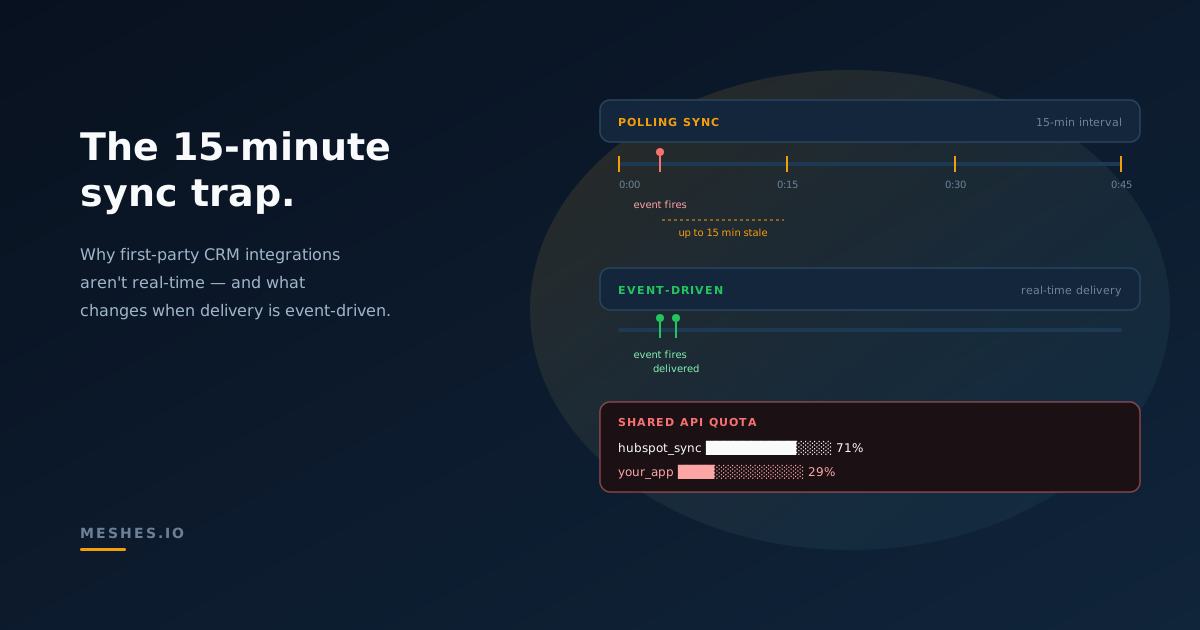
Cover Image for The 15-minute sync trap: when native CRM integrations aren't real-time

The 15-minute sync trap: when native CRM integrations aren't real-time

Native CRM-to-CRM integrations run on polling intervals and share API quotas with every other integrated tool. Here's why your real-time product has a 15-minute freshness floor — and what changes when delivery is event-driven from the product side.
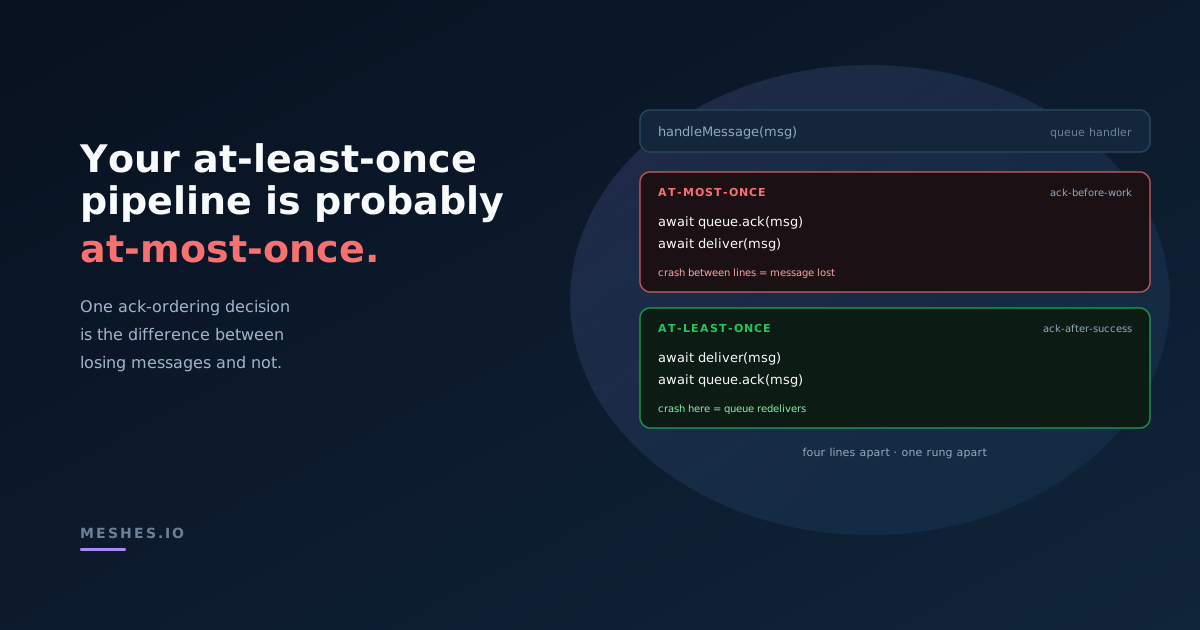
Cover Image for Your at-least-once pipeline is probably at-most-once

Your at-least-once pipeline is probably at-most-once

Most teams say their event delivery is at-least-once. The actual semantics are usually weaker — and the gap is one ack-ordering decision in a queue handler. A walk through the patterns that silently downgrade delivery guarantees, and how to tell which one you have.
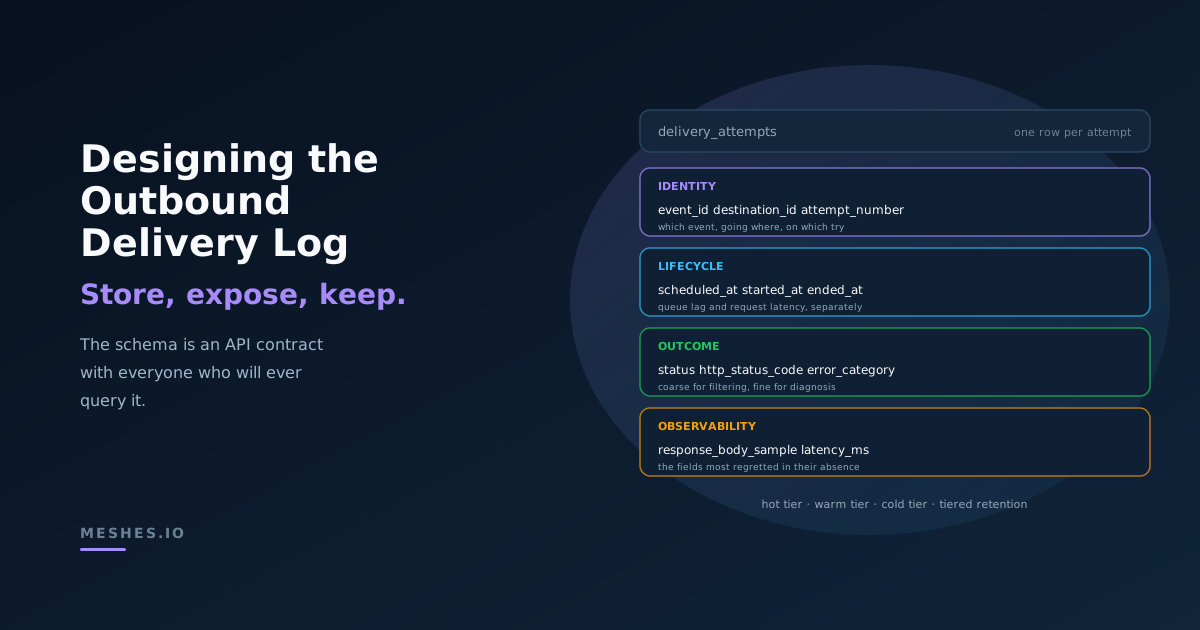
Cover Image for Designing the outbound delivery log: what to store, what to expose, what to keep

Designing the outbound delivery log: what to store, what to expose, what to keep

The durable log of every outbound delivery attempt is the spine of an integration system — and the schema decisions made on day one decide which questions it can answer for years. A practical guide to fields, query patterns, customer visibility, and retention tiers.
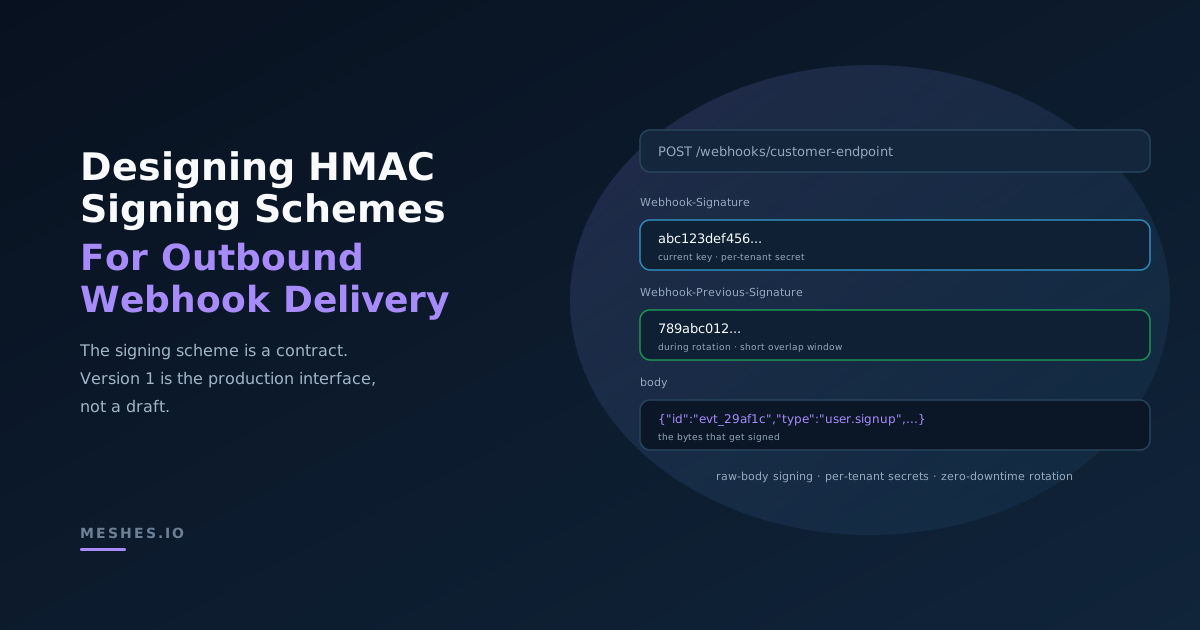
Cover Image for Designing HMAC signing schemes for outbound webhook delivery

Designing HMAC signing schemes for outbound webhook delivery

Most HMAC guidance is written for receivers verifying signatures. The sender side — especially when you're a multi-tenant SaaS — has its own set of decisions. A practical guide to schemes that survive versioning, key rotation, and in-flight retries.
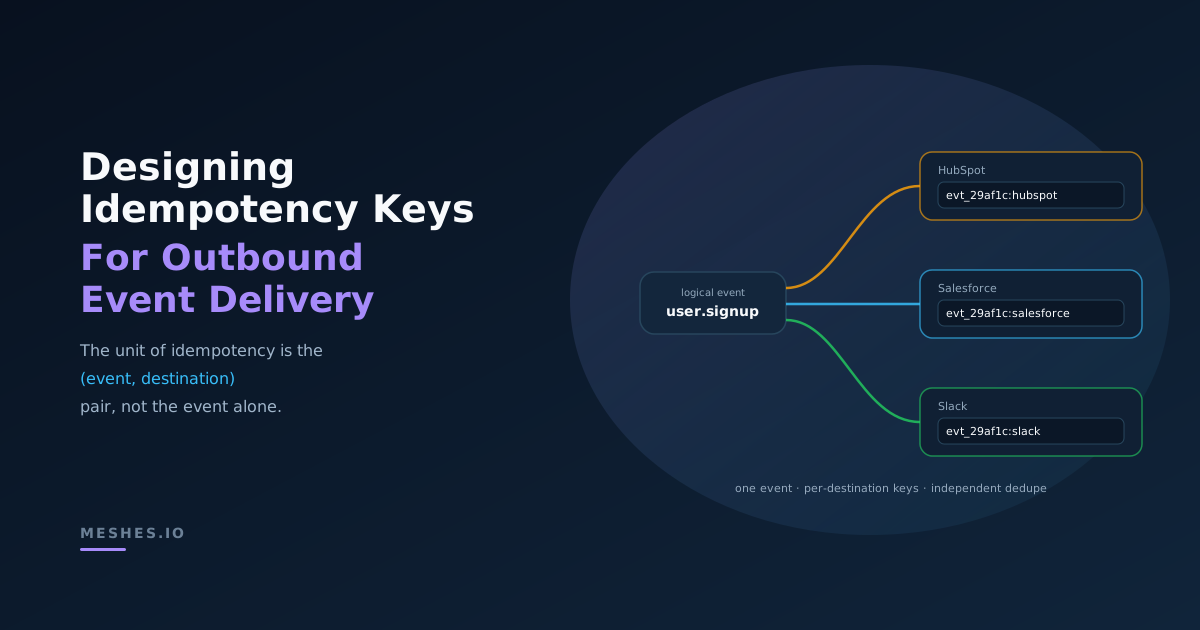
Cover Image for Designing idempotency keys for outbound event delivery

Designing idempotency keys for outbound event delivery

Most idempotency guidance is written for webhook receivers. The emitter side — especially under fan-out — has its own set of problems. A practical guide to designing keys that survive retries, replays, and multi-destination delivery.

Newer postsOlder posts