• Use Cases
  • Pricing
  • Security
  • Docs
Sign InStart free

The outbound integration layer for SaaS products: emit once, then let Meshes handle routing, retries, fan-out, and delivery history.

© Copyright 2026 Meshes, Inc. All Rights Reserved.

About
  • About
  • Security
  • Blog
  • Contact
  • FAQ
Product
  • Pricing
  • Demo
  • Integrations
  • Guides
  • Changelog
  • Status
Compare
  • All comparisons
  • Build vs buy
  • vs Paragon
  • vs Merge
  • vs n8n
  • vs Zapier
  • vs Make
Use Cases
  • All use cases
  • Embedded CRM sync
  • Per-tenant Slack
  • HMAC webhooks
  • Multi-env workspaces
  • Payment failed
  • User signup fan-out
  • Churn prevention
  • Trial expired events
Developers
  • Documentation
  • Agents
  • Tools
  • API Reference
  • MCP Server
  • llms.txt
Legal
  • Terms of Service
  • Privacy Policy
  • Acceptable Use Policy
  • Cookie Policy

Blog Archive: June 2026

Integration engineering posts published in June 2026, covering SaaS integrations, event routing, retries, OAuth, and delivery reliability.
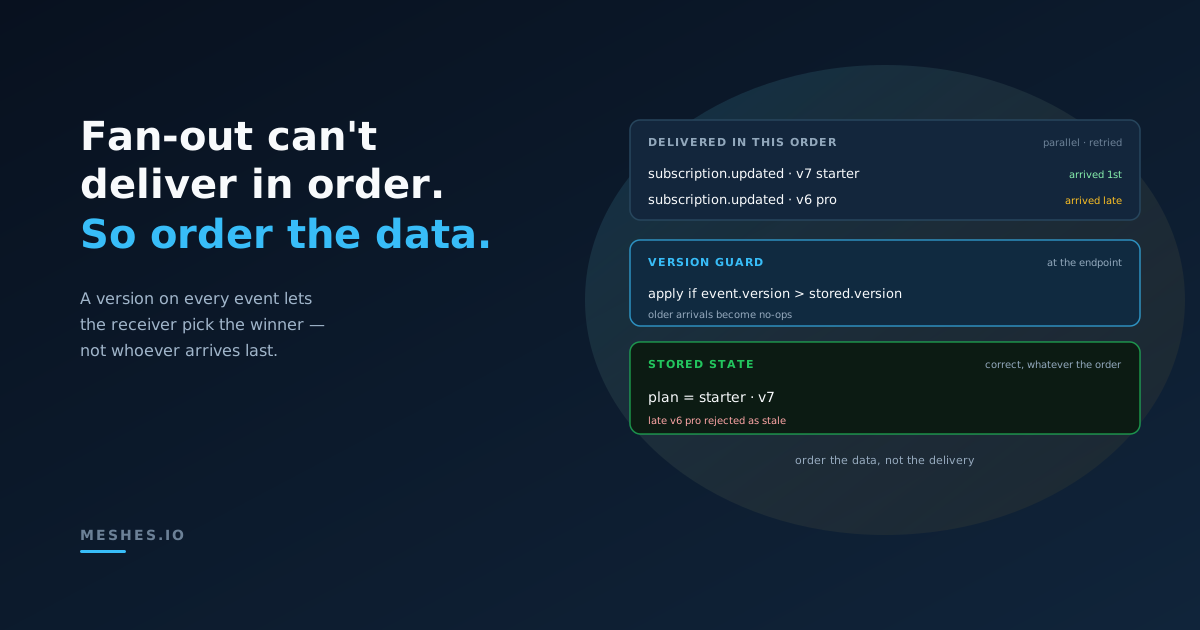
Cover Image for Order at the Endpoint, Not the Delivery

Order at the Endpoint, Not the Delivery

Fan-out and retries mean events can arrive out of order — ordering is not guaranteed. The fix is not ordered delivery; it is a receiver that converges on correct state no matter what sequence events show up in. Here is how to build one.
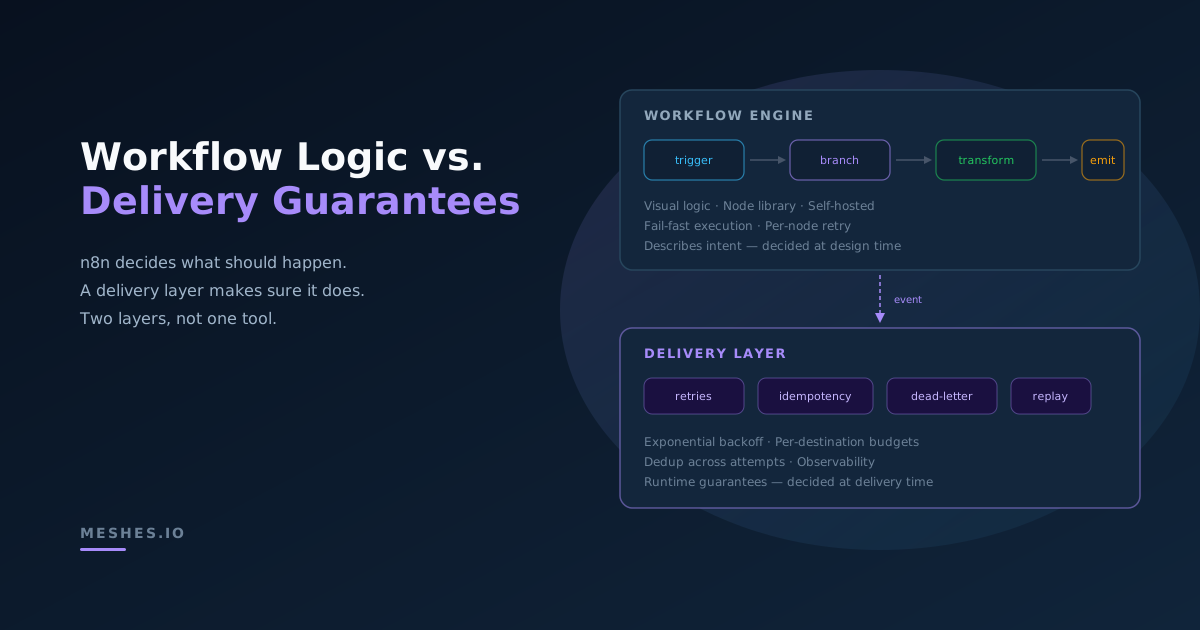
Cover Image for n8n handles workflow logic. Delivery guarantees need a separate layer.

n8n handles workflow logic. Delivery guarantees need a separate layer.

Workflow engines like n8n decide what should happen and when. Delivery guarantees — retries, idempotency, dead-letter handling, replay — are a separate architectural concern. Here's why the two layers work together rather than collapsing into one tool.
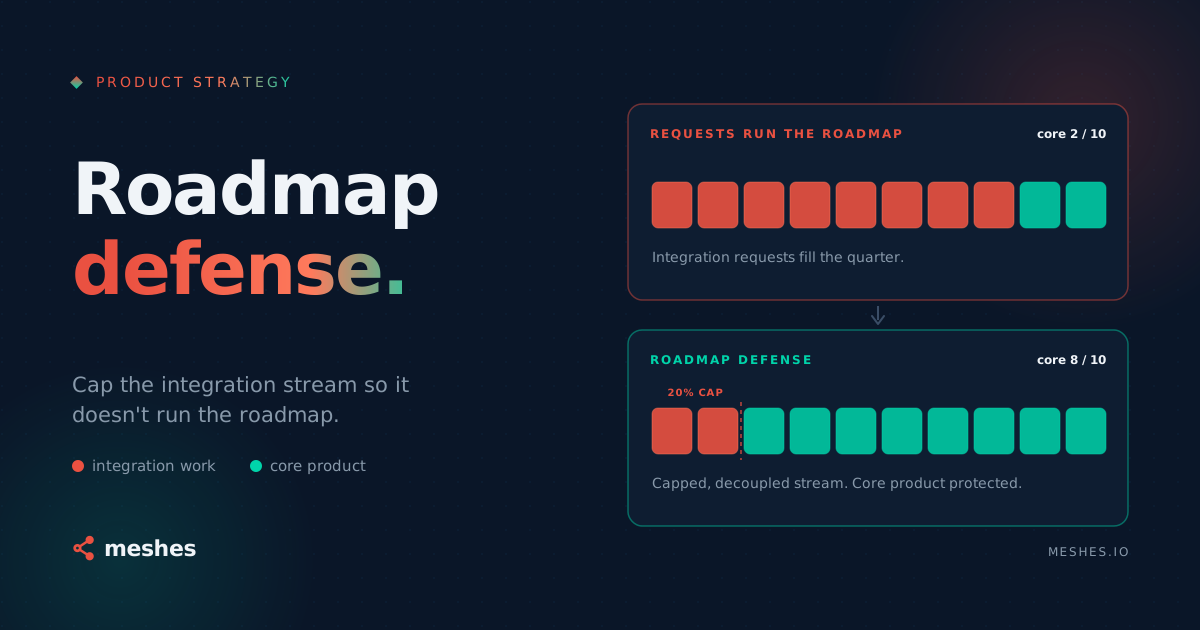
Cover Image for When integration requests start running the roadmap

When integration requests start running the roadmap

Customer integration requests can quietly take over a SaaS roadmap. Here's why integration work compounds, why it is hard to deprioritize, and how teams contain it without stalling the core product.

Newer postsOlder posts